Fewer Pilots, Longer Waits: How America's Harbor Pilot Shortage Is Quietly Straining Port Throughput
When a fully loaded container vessel approaches a major US port, one of the first calls the captain makes is for a harbor pilot—a licensed professional whose sole function is to guide that ship safely through confined channels, past shifting sandbars, and around the dense traffic of a working port. It is a role that demands years of accumulated local knowledge, precise situational awareness, and a licensing process that takes the better part of a decade to complete. And right now, there are not enough of these professionals to go around.
Across the United States, the licensed maritime pilot workforce is under strain. Retirements are outpacing new certifications. Training pipelines that were already narrow have grown narrower. And the vessels requesting pilotage services are, on average, larger and more complex than at any previous point in the industry's history. The result is a quiet but compounding operational problem that port authorities, shipping lines, and cargo owners are only beginning to fully reckon with.
The Anatomy of a Bottleneck
Unlike many maritime workforce challenges, the pilot shortage does not manifest as a dramatic, visible crisis. Ships do not pile up at anchor in full public view the way they did during the COVID-era congestion events of 2021 and 2022. Instead, the pressure accumulates in scheduling queues, extended vessel wait times, and reduced operational windows at affected ports.
In practical terms, a shortage of available pilots means that vessels arriving within a narrow scheduling window may wait hours—sometimes longer—before a pilot can board. For a carrier operating on tight port rotation schedules, even a four-hour delay ripples downstream, affecting berth availability, crane scheduling, and ultimately cargo delivery commitments.
Some ports have responded by narrowing the windows during which large-vessel movements are permitted, concentrating pilot deployments during peak-efficiency periods. While this approach preserves safety margins, it also reduces the total number of vessel transits a port can accommodate in a given day—a trade-off that carries real throughput consequences during periods of high demand.
Regional Disparities in Pilot Availability
The shortage is not distributed evenly across the country. Certain regions face more acute constraints than others, shaped by local licensing structures, geographic complexity, and the volume of vessel traffic each waterway must absorb.
Gulf Coast ports, including those serving the Houston Ship Channel and the lower Mississippi River corridor, operate in some of the most technically demanding pilotage environments in the world. Long, narrow channels, heavy petrochemical traffic, and seasonal weather variability place exceptional demands on pilots working these waters. Retirements among senior pilots in this region have been particularly significant, and the apprenticeship programs designed to replace them have not kept pace.
On the West Coast, ports such as Los Angeles, Long Beach, and the Puget Sound complex face their own version of the challenge. Ultra-large container vessels—ships carrying 18,000 to 24,000 TEUs—require pilots with specific experience managing their handling characteristics in confined berths. The certification pathways for these vessel classes are distinct, adding another layer of specificity to an already specialized workforce.
East Coast ports, while somewhat better positioned in terms of overall pilot numbers, are not immune. The expansion of post-Panamax vessel calls following the Panama Canal's widening has increased the complexity and physical demands of pilotage assignments at ports from Savannah to Baltimore, stretching experienced pilot rosters in ways that were not fully anticipated when infrastructure investments were first planned.
The Training Pipeline Problem
At the core of the shortage is a structural mismatch between the time required to credential a maritime pilot and the rate at which experienced professionals are exiting the workforce.
In most US states, becoming a licensed harbor pilot requires completing a formal apprenticeship program that typically spans five to seven years. Apprentices must accumulate a prescribed number of supervised transits, pass a series of examinations, and demonstrate competency across a full range of vessel types and weather conditions before earning an unrestricted license. The process is rigorous by design—the consequences of an error in a crowded channel are severe—but its length means that workforce gaps cannot be addressed quickly.
Pilot associations and state licensing boards have been working to identify efficiencies within these programs without compromising the safety standards that underpin them. Some associations have expanded apprentice cohort sizes. Others are exploring simulation-based training components that can accelerate certain aspects of the curriculum without reducing the hours of supervised, real-world experience that remain essential.
Federal agencies, including the US Coast Guard, have engaged with pilot associations on workforce planning, though the decentralized nature of US pilotage—administered at the state level through a patchwork of licensing authorities—complicates coordinated national responses.
How Ports Are Adapting in the Near Term
Facing a shortage that cannot be resolved quickly, port authorities and harbormaster offices have turned to operational adjustments to manage throughput without compromising safety.
One approach involves more sophisticated scheduling technology. By coordinating vessel arrival times more precisely with pilot availability, some ports have reduced the idle wait time that accumulates when vessels arrive outside their assigned windows. This does not increase the number of pilots available, but it does extract greater efficiency from the pilots already on roster.
Several ports have also formalized communication protocols between pilot dispatch centers and terminal operators, allowing berth schedules to flex in real time when pilot delays occur. Rather than cascading disruptions through a fixed schedule, terminals can reassign berth slots or adjust crane gang deployments to minimize the downstream impact of a delayed vessel movement.
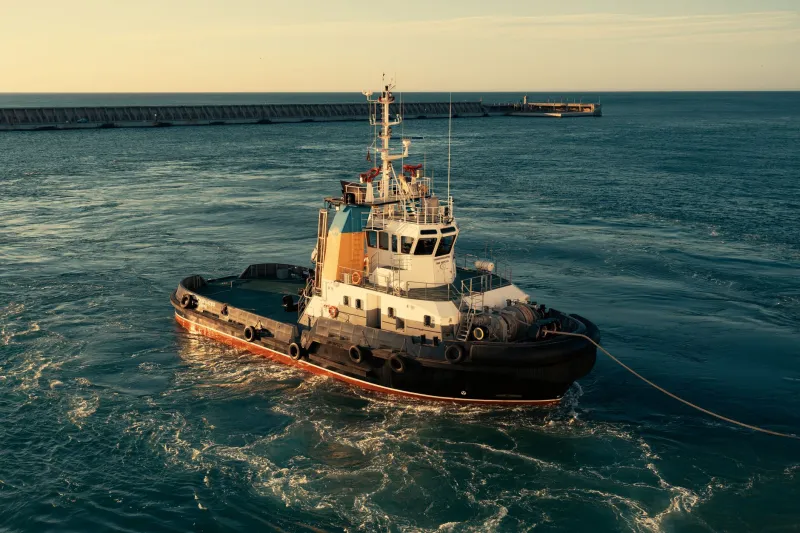
In select circumstances, ports have also examined the conditions under which tug-assist requirements and escort protocols apply, seeking to identify whether any adjustments—within established safety parameters—could allow for more efficient pilot deployment across a given day's traffic.
Safety as a Non-Negotiable Constraint
Throughout these adaptations, one principle has remained consistent: safety governs every operational decision. Harbor pilots operate in environments where the margin for error is measured in feet, not miles, and where a single grounding or collision can close a channel for days, inflicting economic damage that dwarfs any scheduling efficiency gained.
This reality places a natural ceiling on how aggressively ports can optimize around a pilot shortage. Reducing safety buffers to increase throughput is not a viable strategy, and port authorities have been consistent in communicating as much to carriers and cargo owners pressing for faster vessel processing.
What this means for the broader industry is that the pilot shortage represents a genuine capacity constraint—one that cannot be engineered around indefinitely. Until the training pipeline produces sufficient new license holders to replace departing professionals, US ports will continue navigating a tension between throughput demand and the human expertise required to meet it safely.
The Longer View
For maritime operators, the harbor pilot shortage is a useful lens through which to examine a wider truth about US port capacity: physical infrastructure and digital technology can only accomplish so much when the specialized human knowledge that activates them is in short supply.
Carriers and logistics managers would be well served by incorporating pilot availability into their port selection and scheduling analyses—particularly at ports where wait time data suggests persistent constraints. Those who treat pilotage as an invisible, guaranteed service may find themselves repeatedly surprised by delays that, viewed through the right data, were entirely foreseeable.
The professionals guiding vessels through America's harbors are among the most credentialed workers in any industry. Replacing them takes years. Building that recognition into operational planning is not merely prudent—at this stage of the shortage, it is becoming a competitive necessity.