From Dock to Doorstep: How the Final Leg of Container Delivery Is Draining Carrier Margins
For years, the maritime industry directed its modernization energy toward the ocean leg—deploying advanced vessel management systems, renegotiating alliance structures, and building out port-side automation. Those investments paid dividends. Transit reliability improved. Terminal throughput climbed. Visibility tools gave shippers and carriers a clearer picture of where cargo sat at any given moment along the deep-sea corridor.
But a persistent and costly problem has been hiding in plain sight, one that no amount of AIS data or terminal operating software can fully address: what happens after the container leaves the port gate.
The final delivery leg—sometimes called drayage-to-destination, sometimes lumped under the broader label of last-mile logistics—has become one of the most financially punishing segments of the container shipping journey. And for carriers that assumed their responsibility ended at the terminal fence, the reckoning is arriving.
Where the Margin Disappears
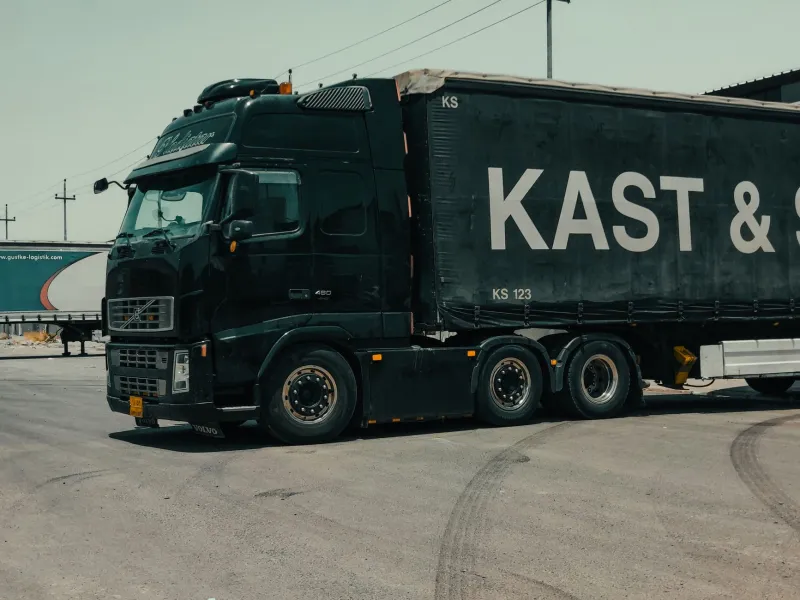
To understand the scale of the problem, consider what a typical US import container journey looks like once it clears customs and exits a major gateway port such as Los Angeles, Savannah, or Houston. The container is picked up by a drayage operator—often an independent owner-operator or small regional trucking firm—and moved to an inland distribution point, a warehouse, or directly to a commercial or retail destination.
At each handoff, coordination breaks down. Appointments are missed. Containers sit on chassis longer than planned, generating detention costs that flow back through the chain. Communication between the ocean carrier, the freight forwarder, the drayage company, and the final consignee is frequently conducted by phone call, email, or outdated EDI messages that were never designed for real-time exception management.
The financial consequences are not trivial. Industry estimates consistently place last-mile trucking costs at anywhere from 30 to 50 percent of total logistics expenditure for a given shipment. For carriers that have structured their commercial offerings around door-to-door or door-to-port pricing, absorbing inefficiency at that final stage directly compresses the margin they earned on the ocean leg.
The Micro-Logistics Surge
The fragmentation problem has not gone unnoticed by the market. Over the past several years, a wave of micro-logistics providers and technology-enabled drayage platforms has emerged specifically to address the port-to-destination gap. Companies such as Dray Alliance, Relay Payments, and a host of regionally focused freight-tech startups have built platforms that connect cargo owners with vetted drayage capacity, automate appointment scheduling, and provide real-time tracking from port gate to delivery confirmation.
These platforms are genuinely solving problems. Drayage matching that once required hours of phone calls can now be executed algorithmically. Chassis availability data, long a black box for shippers, is being surfaced through integrations with chassis pool operators. Payment cycles that historically stretched 45 to 60 days for small trucking firms are being compressed through embedded fintech tools, which in turn improves driver retention and capacity reliability.
But from the perspective of a mid-to-large ocean carrier, these platforms present a double-edged dynamic. On one hand, they improve the customer experience for shippers using carrier services. On the other hand, they represent a layer of commercial intermediation that the carrier does not control—and does not profit from. The micro-logistics provider captures a margin spread that, in a more vertically integrated model, could accrue to the carrier itself.
The Integration Imperative
A growing number of carriers and non-vessel operating common carriers (NVOCCs) are responding by moving aggressively toward last-mile integration. The strategic logic is straightforward: if a carrier can offer a shipper a single contract, a single invoice, and a single point of accountability from origin port to final US delivery address, that carrier commands a pricing premium that a purely ocean-focused competitor cannot match.
Maersk's well-documented push toward logistics integration—acquiring warehousing operators, customs brokers, and inland transportation assets—represents the most visible expression of this strategy at the global scale. But similar movements, proportionally sized, are visible among regional operators and NVOCCs serving specific US trade lanes.
Smaller carriers are pursuing the same objective through partnership structures rather than acquisition. Preferred-provider agreements with regional drayage firms, co-branded tracking portals that extend visibility from vessel to van, and revenue-sharing arrangements with inland logistics platforms are all being deployed as alternatives to the capital-intensive M&A route.
The common thread across these approaches is a recognition that the carrier's value proposition can no longer end at the water's edge.
Structural Barriers That Won't Resolve Themselves
Integration ambitions, however, collide with structural realities that are slow to change. The US drayage market remains heavily fragmented, with the majority of capacity controlled by small operators running fewer than ten trucks. Regulatory complexity—including Hours of Service rules, California Air Resources Board emissions standards affecting port drayage in the state's major gateway markets, and varying local permitting requirements—makes building a standardized national last-mile operation genuinely difficult.
Chassis availability, long a source of friction at ports including New York-New Jersey and the Ports of Los Angeles and Long Beach, continues to constrain delivery velocity in ways that no carrier-side software investment can fully mitigate. When chassis pools run short during peak season, containers dwell. Dwell generates cost. Cost erodes the margin that the carrier's ocean operations spent the entire voyage accumulating.
Labor dynamics add another layer of complexity. The independent contractor model that underpins much of US port drayage is facing legal scrutiny in multiple states, with California's AB5 legislation representing the most significant regulatory pressure. Carriers building last-mile partnerships with drayage firms must now account for the possibility that the labor classification landscape will shift materially over the next several years, altering cost structures in ways that are difficult to model today.
What Operators Should Be Doing Now
For US-focused carriers and logistics operators assessing their exposure to last-mile risk, several practical steps are worth prioritizing.
First, audit the gap. Many carriers have limited visibility into what actually happens to their containers after gate-out. Establishing systematic tracking of dwell time, detention incidence, and delivery exception rates at the container level provides the baseline data necessary to quantify the problem and build the business case for investment.
Second, evaluate partnership versus ownership. Acquiring last-mile capacity is capital-intensive and operationally complex. For most carriers outside the top tier, preferred-network agreements with technology-enabled drayage platforms offer a faster path to improved customer experience and margin recovery without the balance sheet exposure.
Third, build contractual clarity around last-mile costs. Ambiguity in shipper contracts about who bears detention, chassis, and delivery-delay costs is a primary mechanism through which last-mile inefficiency becomes a carrier liability. Tightening contract language—and investing in the customer communication infrastructure to enforce it—is among the highest-return actions available.
Finally, treat last-mile capability as a commercial differentiator, not merely an operational footnote. Shippers that have lived through recent years of supply chain disruption are increasingly willing to pay for reliability and accountability across the full delivery arc. Carriers that can credibly offer that—and back it with operational performance—are positioned to compete on dimensions beyond freight rate alone.
The ocean leg will always be the center of gravity for maritime commerce. But the carriers that thrive in the next decade will be those that recognize the dock gate not as a finish line, but as the beginning of the delivery promise that actually matters to the customer.