Beyond the Big Names: How Regional Ports Are Becoming America's Quietly Critical Chokepoints
The American maritime industry has long organized its strategic thinking around a handful of dominant gateways. Los Angeles, Long Beach, New York, and Savannah command the lion's share of policy attention, infrastructure investment, and industry commentary. Yet a growing number of logistics professionals are confronting an uncomfortable reality: the ports that are quietly grinding the supply chain to a halt are not the ones making headlines.
Across the Gulf Coast, the Pacific Northwest, the Great Lakes corridor, and the Atlantic's secondary harbors, smaller regional ports are absorbing cargo volumes they were never designed to handle. The consequences—delayed deliveries, elevated drayage costs, and constrained inventory positioning—are rippling outward to affect shippers of every size and sector.
The Infrastructure Deficit No One Is Talking About
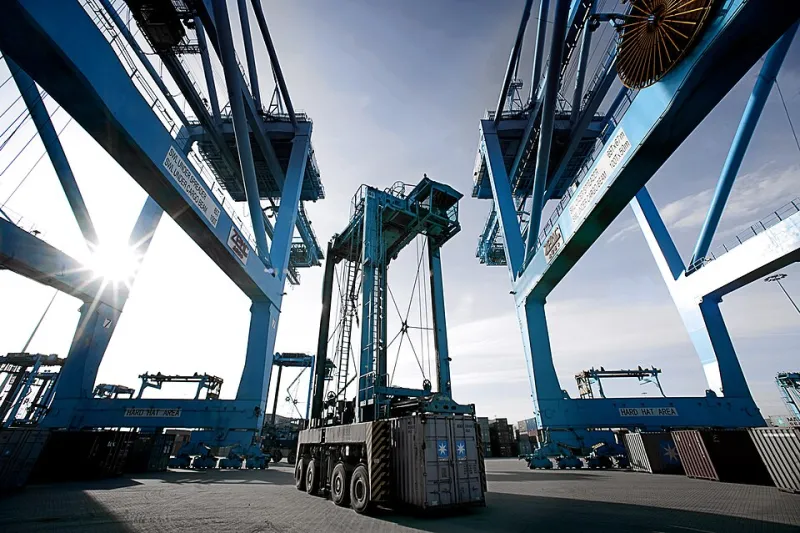
The United States operates more than 150 public ports, yet federal and state infrastructure investment has historically concentrated on the top tier. According to data from the American Association of Port Authorities, a significant share of ports outside the top twenty have not undergone major berth modernization in more than two decades. Crane capacity at many of these facilities remains calibrated for vessel classes that have since been superseded by the ultra-large container ships now dominating transoceanic routes.
The mismatch is not merely mechanical. Intermodal connectivity—the rail and highway links that move cargo from the waterfront to distribution centers—is frequently inadequate at regional facilities. Where a port like Savannah can draw on a robust inland rail network, a port such as Mobile, Alabama, or Wilmington, North Carolina, may offer limited rail access, forcing shippers to rely on over-the-road trucking at a moment when driver shortages and fuel costs are already compressing margins.
The result is a compounding problem: cargo arrives at the dock and then stalls, waiting for ground transportation capacity that simply does not exist in sufficient quantity.
Why Shippers Are Arriving at the Wrong Ports for the Right Reasons
The routing decisions that land cargo at secondary ports are rarely arbitrary. In many cases, shippers divert to smaller facilities precisely because the primary gateways are saturated. During the congestion surges of 2021 and 2022, vessels anchored for weeks outside Los Angeles and Long Beach. Carriers and their customers began exploring alternatives with genuine urgency.
That urgency has not fully dissipated. Even as headline congestion figures at megaports have moderated, structural demand pressures—driven by nearshoring activity, inventory restocking cycles, and the continued growth of e-commerce fulfillment—are keeping cargo volumes elevated across the network. Shippers who diversified their routing to avoid gateway congestion have discovered that their alternative choices come with their own set of constraints.
Portland, Oregon, for instance, has seen renewed interest from agricultural exporters and certain bulk commodity shippers. Yet its container-handling infrastructure remains limited compared to Seattle-Tacoma, and labor agreements at the port have historically introduced operational unpredictability. Similarly, ports along the Gulf Coast—including Corpus Christi and Lake Charles—have attracted energy sector cargo but lack the general-purpose container terminal capacity to serve as true diversification options for consumer goods importers.
The Hidden Costs of Suboptimal Routing
When a shipper is forced to reroute through a regional port that lacks adequate equipment or connectivity, the cost calculation extends well beyond port fees. Dwell time—the period cargo sits at a terminal awaiting pickup or onward transport—rises sharply at facilities without sufficient yard management technology or gate automation. Extended dwell generates demurrage and detention charges that can erode margin on an entire shipment.
Beyond direct fees, there is the less-visible cost of inventory uncertainty. When transit time variability increases because a port cannot process cargo predictably, downstream inventory buffers must expand. Warehousing costs rise. Just-in-time manufacturing schedules absorb shocks they were not engineered to handle. For industries with tight production windows—automotive components, pharmaceutical inputs, seasonal retail goods—a day of unexpected port delay can cascade into significant operational disruption.
Freight forwarders and third-party logistics providers have begun quantifying these costs more rigorously for their clients. The clearest finding is that the apparent savings from diverting to a lower-fee secondary port frequently disappear once total landed cost is calculated.
Ports Positioned to Capture the Overflow—If Investment Follows
Not every secondary port is simply a liability. Several facilities are actively positioning themselves to absorb overflow from congested gateways, provided that targeted investment materializes.
Seagirt Marine Terminal in Baltimore has invested in post-Panamax crane capacity and benefits from direct access to the CSX rail network. With the reconstruction of the Francis Scott Key Bridge now underway following the 2024 collapse, the port's medium-term trajectory depends heavily on the pace of that project—but its underlying infrastructure is more capable than many peers.
Port of Virginia (Norfolk) has continued an aggressive modernization program, including automated stacking cranes and expanded berth depth. Its intermodal connectivity is among the strongest on the East Coast outside of Savannah, and it has actively marketed itself as a relief valve for New York/New Jersey congestion.
Port of Freeport in Texas has attracted attention from energy and petrochemical shippers and is exploring expanded general cargo capabilities. Its proximity to Houston's distribution infrastructure offers genuine logistical advantages.
Port Hueneme in California, while small by any measure, has carved out a specialized niche in automotive and fresh produce imports—demonstrating that regional ports can compete effectively when they align capacity with specific cargo types rather than attempting to replicate the breadth of a gateway terminal.
What Logistics Leaders Should Be Doing Now
For maritime professionals managing US-bound or US-origin cargo, the regional port challenge demands a more granular approach to routing strategy than many organizations currently employ.
First, conducting a comprehensive port-by-port dwell time and demurrage analysis for every facility in an active routing portfolio is no longer optional. Aggregate carrier scorecards rarely capture the performance variance between individual terminals.
Second, logistics teams should be engaging directly with port authorities at secondary facilities to understand planned capital investment timelines. A port that is constrained today but scheduled for crane upgrades and gate automation within eighteen months represents a different risk profile than one with no improvement plan on the horizon.
Third, relationships with regional drayage carriers and short-sea shipping operators deserve renewed attention. In several corridors, short-sea services connecting secondary ports to distribution hubs are offering competitive transit times with significantly less congestion exposure than landside alternatives.
The megaports will continue to dominate trade flows for the foreseeable future. But the secondary and tertiary facilities that sit in their shadow are increasingly determining whether the broader US maritime network functions smoothly—or grinds against its own limitations at the worst possible moment.