Caught in the Cycle: How the Harbor Pilot Shortage Is Consuming the Very Resources Needed to Fix It

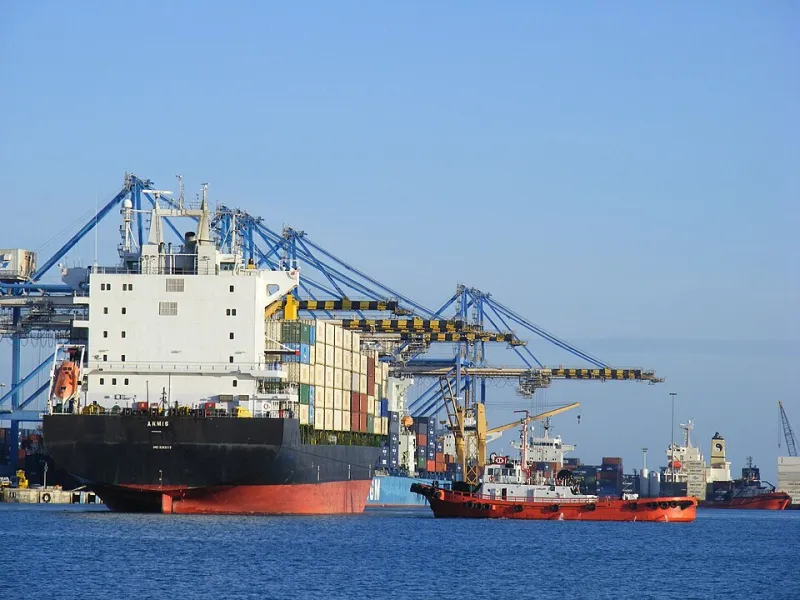
Photo: harbor pilot boarding vessel tugboat port navigation, via iconlogovector.com
There is a particular cruelty embedded in the harbor pilot shortage gripping American ports. The very professionals needed to train the next generation of pilots are too exhausted, too stretched, and too operationally critical to step away from active duty long enough to do so. The result is a feedback loop that compounds itself with each passing season—a systemic trap that port authorities, maritime associations, and state pilotage commissions have struggled to escape despite years of public acknowledgment that the problem exists.
Understanding why this cycle persists requires looking beyond the raw workforce numbers and into the structural conditions that make pilot training uniquely resistant to conventional solutions.
What Makes Harbor Pilot Training Different
Unlike most maritime credentials, harbor pilotage is intensely local by design. A licensed harbor pilot certified for the Port of Houston cannot simply transfer that certification to Savannah or Baltimore. Each pilotage district maintains its own licensing requirements, local knowledge examinations, and apprenticeship structures—a framework rooted in genuine operational necessity. Navigating a vessel through the Houston Ship Channel demands intimate familiarity with its specific tidal patterns, turning basins, and traffic flows. That knowledge cannot be acquired in a classroom or on a simulator alone.
The practical consequence is that training a single harbor pilot is a multi-year commitment. Most apprenticeship programs run between two and five years, during which a trainee accumulates a minimum number of observed transits, passes a series of progressively demanding local knowledge examinations, and gradually assumes greater navigational responsibility under the supervision of a senior pilot. That supervision requirement is the bottleneck. Every hour a senior pilot spends mentoring a trainee is an hour not spent conducting revenue-generating transits—an economic reality that becomes untenable when pilotage associations are already operating below minimum staffing thresholds.
The Overwork Paradox
In ports where vessel traffic has grown faster than pilot rosters—a category that now includes several of the nation's busiest gateways—senior pilots are frequently working at or beyond sustainable operational limits. Fatigue management protocols exist on paper, but the practical pressure to keep vessels moving often overrides them. When a tanker is anchored outside the channel waiting for a pilot and a terminal is holding a berth window open, the institutional pressure on available pilots is considerable.
In that environment, pulling a senior pilot off active rotation to supervise a trainee is not simply inconvenient—it is operationally disruptive in ways that port administrators are reluctant to absorb. The short-term cost of reduced pilot availability is immediate and visible. The long-term cost of failing to train replacements is diffuse and deferred, which means it consistently loses the internal budget argument.
The generational dimension of this problem intensifies the stakes. A significant portion of currently active harbor pilots are within ten to fifteen years of retirement eligibility. In several pilotage districts, more than a third of the active roster falls into this demographic window. If training pipelines do not accelerate materially within the next three to five years, some ports face the prospect of losing institutional knowledge that took decades to accumulate—local expertise that cannot be reconstructed quickly once it walks out the door.
Unconventional Approaches Gaining Traction
A small number of pilotage associations and port authorities have begun experimenting with structural changes designed to relieve the mentorship bottleneck without further straining active pilots.
One approach gaining attention in the Gulf Coast region involves the creation of dedicated training pilot positions—senior pilots who are partially or fully removed from active commercial transit duty and compensated specifically to mentor apprentices. This model requires a financial commitment from the pilotage association or, in some cases, from port authority funds, but it decouples the training function from the operational rotation in a way that makes sustained mentorship viable. The upfront cost is real; the alternative, proponents argue, is far more expensive.
Several East Coast districts have experimented with expanded simulator-based pre-training, compressing the early stages of apprenticeship by ensuring that candidates arrive with a higher baseline of procedural familiarity before they ever board a vessel. While simulators cannot replicate the full complexity of live transit, they can accelerate the ramp-up period and allow limited mentorship hours to be spent on higher-order local knowledge rather than foundational technique.
Recruitment pipelines are also being reconsidered. Historically, harbor pilot candidates have come almost exclusively from the ranks of licensed merchant mariners with substantial deep-sea experience. Some associations are now actively engaging with the US Navy and Coast Guard communities to recruit officers whose vessel-handling backgrounds, while different in context, provide a strong technical foundation for pilotage training. Early results in a handful of districts suggest that this expanded recruiting pool can meaningfully increase the number of qualified applicants without sacrificing the standards that make harbor pilotage reliable.
The Cost of Scaling Solutions
None of these approaches is inexpensive, and that is precisely the barrier to broader adoption. Establishing a dedicated training pilot position at a mid-sized port might cost between $200,000 and $350,000 annually when compensation, benefits, and administrative overhead are factored in. Upgrading simulator infrastructure to support pre-training programs requires capital expenditures that many smaller pilotage districts cannot absorb independently.
The federal role in addressing this gap remains limited. Harbor pilotage is regulated at the state level for the vast majority of ports, which means there is no unified national funding mechanism for training infrastructure. Some industry advocates have called for targeted federal grants through the Maritime Administration to support pilot training programs, particularly in ports serving critical energy or military logistics functions. Those proposals have generated interest on Capitol Hill but have not yet translated into dedicated appropriations.
What industry analysts consistently note is that the cost of inaction is not abstract. Extended vessel wait times attributable to pilot unavailability carry measurable financial consequences—for terminal operators managing berth schedules, for shippers absorbing demurrage exposure, and for carriers whose asset utilization degrades with every unplanned anchor delay. When those costs are aggregated across a busy port over a calendar year, they routinely exceed the investment that a structured training program would require.
A Window That Is Closing
The pilotage community is not unaware of the urgency. Associations in several major districts have quietly accelerated their apprenticeship intake in recent years, accepting more candidates than their mentorship capacity can comfortably support in the hope that the pipeline will self-correct as new pilots complete certification. That approach carries its own risks—compressed mentorship, inconsistent supervision quality, and the possibility that newly certified pilots enter active duty with less accumulated experience than the standard the profession has historically maintained.
The more durable solution is structural: separating training capacity from operational capacity so that the immediate demands of moving vessels do not perpetually crowd out the long-term work of building the workforce. A handful of ports are demonstrating that this separation is achievable. The question facing the broader industry is whether those models will be adopted at scale before the retirement wave arrives—or whether the next chapter of the harbor pilot shortage will be written not in warnings, but in consequences.