The Visibility Gap: Why AIS Is Just the Beginning of What US Shippers Need to See
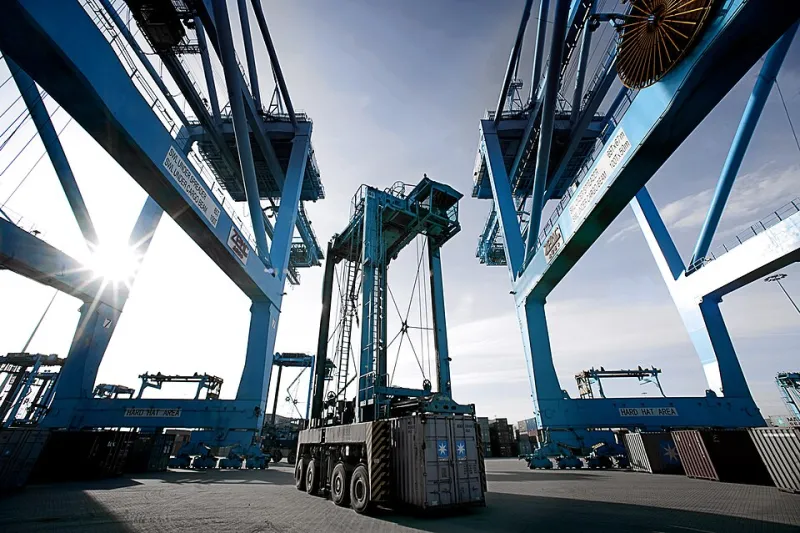
Photo: Maersk Line, CC BY-SA 2.0, via Wikimedia Commons
Ask most logistics managers at mid-to-large US importers whether they track vessel positions in real time, and the answer is almost universally yes. AIS-based tracking has become so widely adopted that it now functions less as a competitive advantage than as a baseline operational hygiene requirement. Knowing where a vessel is on the water is, for most sophisticated shippers, table stakes.
The harder question—and the one that still separates well-prepared logistics teams from those routinely absorbing preventable costs—is what happens once that vessel approaches port. Because the moment a container crosses from open water into the port environment, the visibility infrastructure that shippers have invested in often stops delivering meaningful intelligence. What replaces it, in too many cases, is a combination of manual status checks, carrier advisories of uncertain timeliness, and educated guesswork.
This is not a marginal problem. For US importers operating on lean inventory models, a 48-hour delay in understanding that a vessel has been shifted to an anchorage queue, or that a berth allocation has been reassigned, can cascade into warehouse scheduling failures, missed retailer delivery windows, and demurrage charges that accumulate faster than anyone anticipated.
Where AIS Data Ends
AIS technology was designed for maritime safety and navigation management, not supply chain optimization. It transmits vessel position, heading, speed, and identity—information that is genuinely useful for estimating arrival windows and monitoring route deviations. What it does not transmit is anything that happens after a vessel enters port limits.
Berth allocation decisions, made by port authorities and terminal operators based on operational priorities that are not publicly broadcast, can move a vessel's effective availability window by hours or days with no automatic notification to the cargo interest. Crane scheduling and gang assignments—the specific labor resources that will work a particular vessel—are managed through terminal operating systems that most shippers have no direct access to. Container availability after discharge, which depends on customs release, terminal yard operations, and equipment availability, involves multiple handoffs between parties operating on separate data systems that rarely communicate in real time.
The result is a visibility architecture that is strong at sea and weak precisely where the financial stakes are highest: in the terminal, on the dock, and in the final-mile movement from port gate to distribution center.
The Stevedore Performance Black Box
One of the least-discussed data gaps in US port logistics involves stevedore and terminal productivity metrics. Crane moves per hour, gang utilization rates, and vessel working time are performance variables that directly determine how quickly a ship is worked and when cargo becomes available. These metrics are tracked internally by terminal operators, and in some cases shared with ocean carriers under contractual arrangements—but they are rarely visible to beneficial cargo owners in any systematic way.
For shippers trying to understand why a vessel that arrived on schedule is delivering cargo two days behind projection, the absence of this data creates a frustrating opacity. Was the vessel worked at reduced productivity due to labor constraints? Was it shifted between berths? Were specific containers held for inspection or equipment reasons? Without access to terminal performance data, shippers are left reconstructing events after the fact, typically through conversations with freight forwarders who are themselves working from incomplete information.
Some of the larger terminal operators in the US—including those at the ports of Los Angeles, Long Beach, and Savannah—have made progress in expanding shipper-facing portal access to container status information. But the granularity and timeliness of this data varies considerably, and smaller regional terminals frequently offer minimal digital transparency.
Port Community Systems and the Integration Problem
The structural solution to port visibility fragmentation is the port community system: a shared digital infrastructure that connects terminal operators, carriers, customs authorities, freight forwarders, and beneficial cargo owners on a common data platform. Several US ports have invested in or piloted such systems, with varying degrees of adoption and success.
The challenge is not primarily technological. The data standards and integration protocols required to connect disparate terminal operating systems, customs platforms, and carrier booking systems are well understood. The obstacle is commercial: each participant in the port ecosystem has its own data governance interests, and information that one party considers operationally proprietary may be precisely what another party needs to manage their supply chain effectively.
Progress is being made at the federal level, with the Maritime Administration and the Department of Transportation continuing to advance the National Multimodal Freight Network and related data-sharing initiatives. The FLOW (Freight Logistics Optimization Works) program, which emerged from the port congestion crisis of 2021 and 2022, represented a meaningful attempt to create voluntary data-sharing arrangements between major importers, carriers, and terminal operators. The lessons from that initiative—including the significant resistance to sharing commercially sensitive data—continue to inform how subsequent programs are structured.
Emerging Tools Filling the Gaps
In the absence of comprehensive port community system coverage, a growing ecosystem of logistics technology providers is attempting to fill specific visibility gaps through alternative data sources and operational partnerships.
Some platforms aggregate vessel scheduling data from multiple carrier APIs, cross-referencing it against terminal berth schedules and historical performance data to generate more accurate estimated availability windows than AIS alone provides. Others focus specifically on the customs and terminal release process, monitoring Customs and Border Protection data feeds to provide earlier notification of clearance status. A smaller number of providers are working directly with terminal operators to access gate transaction data, providing shippers with real-time visibility into when their containers physically exit port premises.
For the final-mile segment—the drayage movement from port gate to distribution center or rail ramp—telematics and driver app platforms have improved visibility considerably over the past several years. The remaining gap is typically at the handoff points: knowing that a container is available for pickup does not guarantee that a dray carrier has been dispatched, and knowing that a dray carrier has been dispatched does not guarantee real-time location visibility until the driver activates the appropriate application.
Operational Partnerships as a Visibility Strategy
Technology alone does not close the visibility gap. For many US shippers, the most reliable path to improved port-level intelligence runs through operational relationships with parties who have direct system access: freight forwarders with established terminal relationships, customs brokers with strong CBP communication channels, and drayage providers with disciplined track-and-trace practices.
These relationships are not a substitute for data infrastructure, but they function as a meaningful complement to it—particularly for shippers whose cargo volumes do not justify direct technology investment at every touchpoint. The practical recommendation for logistics teams is to audit their current visibility architecture against the specific handoff points where information gaps most frequently translate into financial exposure, and to prioritize investments—whether in technology, operational partnerships, or both—accordingly.
The maritime supply chain generates more data than any previous era of commerce. The challenge for US shippers is not a shortage of information in aggregate, but a persistent shortage of the right information at the right moment. Closing that gap, one data handoff at a time, is increasingly the defining operational challenge for import and export logistics professionals navigating today's port environment.