Disconnected by Design: The Data Fragmentation Problem Quietly Undermining American Port Efficiency

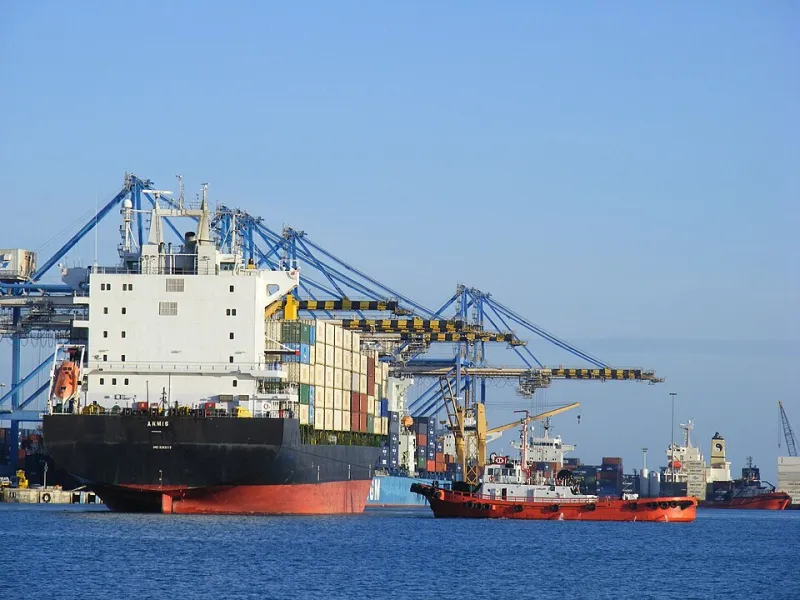
Photo: Unknown authorUnknown author, Public domain, via Wikimedia Commons
America moves more containerized cargo than almost any other nation on earth. Its ports process trillions of dollars in goods annually, feeding a domestic supply chain that stretches from coastal terminals to inland distribution centers thousands of miles away. Yet for all that volume and economic weight, a fundamental operational problem persists: the systems that manage information across American ports largely cannot speak to one another.
This is not a new observation. Port technology specialists, logistics consultants, and shipper associations have raised the interoperability issue for more than a decade. What has changed is the cost. As global trade has grown more time-sensitive, and as supply chain disruptions have demonstrated just how quickly an information gap becomes a financial loss, the price of fragmented port data ecosystems has become impossible to ignore.
What Fragmentation Actually Looks Like on the Ground
To understand the scope of the problem, it helps to start at the operational level. A vessel arriving at a major US port may interact with a terminal operating system, a port community system, a US Customs and Border Protection interface, a trucking dispatch platform, and a rail coordination tool—none of which necessarily share a common data standard or real-time feed.
A carrier's operations team monitoring that vessel may have access to some of those data streams but not others. A shipper waiting on a time-sensitive delivery may have visibility into none of them without paying for third-party aggregation services. When a berth assignment shifts, when a chassis becomes unavailable, or when a customs hold is placed on a container, that information frequently travels through phone calls, emails, and manual portal logins rather than automated system-to-system notifications.
The downstream effects are predictable. Drayage trucks arrive at terminals before containers are available for pickup. Rail windows are missed because inland transfer updates don't reach logistics coordinators in time. Shippers build buffer days into their schedules not because transit times require it, but because information unreliability does.
Why Standardization Efforts Have Repeatedly Stalled
The case for a unified national port data standard seems self-evident, yet the effort to create one has encountered the same obstacles across multiple attempts. The barriers are as much institutional as they are technical.
American ports operate under a decentralized governance model. Unlike some European counterparts where national port authorities set interoperability requirements, US ports are managed by a combination of local port authorities, private terminal operators, and state agencies, each with its own procurement history, vendor relationships, and technology investment timelines. A terminal that spent $40 million implementing a proprietary operating system five years ago has limited appetite for adopting a new standard that would require significant reintegration work.
Vendor dynamics compound the problem. The market for terminal operating systems is dominated by a small number of software providers, each of which has competitive incentives to maintain proprietary data architectures. Open standards reduce switching costs for clients—which is precisely why clients want them and vendors resist them.
Federal coordination efforts have made incremental progress. The Port Performance Freight Statistics Program, administered through the Bureau of Transportation Statistics, collects standardized throughput data from major ports, but that program measures output rather than enabling real-time operational coordination. The broader ambition of creating a national port information exchange remains largely aspirational.
The Ports Attempting to Lead
Not every American port is waiting for federal consensus. Several have pursued bilateral and multilateral data-sharing agreements that, while falling short of national standardization, represent meaningful steps toward regional integration.
The Port of Los Angeles has invested substantially in its Port Optimizer platform, a tool developed in partnership with GE Transportation that aggregates data from multiple supply chain participants and provides shippers with earlier visibility into cargo availability. The platform has demonstrated measurable reductions in truck turn times at the San Pedro Bay complex and has attracted participation from a growing number of ocean carriers and terminal operators.
On the East Coast, the Port of Virginia has pursued aggressive technology integration as part of a broader modernization strategy, linking its terminal operating systems with inland intermodal facilities and offering application programming interfaces that allow third-party logistics platforms to access operational data directly.
These initiatives are genuinely significant. But they are also isolated. A shipper routing cargo through Los Angeles, then transferring to rail for delivery via a Gulf Coast distribution point, still encounters a data handoff problem the moment cargo leaves the San Pedro Bay ecosystem. The value of any single port's integration investment diminishes rapidly at the boundary of its own operational footprint.
What a Connected Network Would Actually Unlock
The business case for genuine interoperability is not abstract. It translates into specific operational and financial outcomes that US shippers and carriers could realize relatively quickly if the infrastructure existed.
Real-time chassis availability data shared across terminals would reduce the estimated 20 to 30 percent of drayage truck trips that arrive at ports without completing a productive move. Automated customs status updates flowing directly into carrier and shipper systems would eliminate the manual tracking work that currently occupies significant portions of logistics coordinator time. Predictive berth scheduling informed by vessel position data, port congestion indicators, and inland rail capacity metrics would allow carriers to make smarter routing decisions days before arrival rather than hours.
Perhaps most consequentially, a connected port network would shift American supply chains from reactive to anticipatory. Today, disruptions propagate through the system before most participants are aware they have occurred. With genuine data integration, the same disruption could trigger automated rerouting recommendations, adjusted pickup windows, and proactive shipper notifications—compressing the response cycle from days to hours.
For US competitiveness in global trade, the stakes extend beyond individual shipper budgets. Ports in Rotterdam, Singapore, and Shanghai have invested heavily in integrated port community systems that give their users a measurable service advantage. As manufacturing reshoring and nearshoring continue to direct more cargo toward American ports, the capacity of those ports to handle increased volume efficiently will depend in part on whether their information infrastructure can match the ambition of their physical expansion plans.
A Practical Path Forward
Complete national standardization is unlikely to emerge from a single federal mandate. The more realistic path runs through a combination of regulatory incentives, voluntary industry frameworks, and technology procurement requirements attached to federal port infrastructure funding.
The bipartisan infrastructure legislation passed in 2021 allocated substantial funds for port modernization. Tying a portion of future disbursements to demonstrated data interoperability standards would create a financial incentive structure that has been absent from previous standardization efforts. It would also give port authorities a justification for renegotiating vendor contracts that currently lock them into proprietary architectures.
In the near term, shippers and carriers operating across multiple port corridors should be actively evaluating which ports in their networks offer open data interfaces and factoring that capability into routing decisions. Market pressure, applied consistently, is one of the few forces capable of accelerating technology adoption in an industry where capital cycles are long and institutional inertia is significant.
The connected American port network is not a distant technological fantasy. The components exist. The economic argument is documented. What has been missing is the coordinated will to assemble them. For an industry that prides itself on moving the world's goods with precision, the inability to share a data feed across a harbor remains an anomaly that the market can no longer afford to accommodate.