Cutting Out the Congestion: How Smaller Carriers Are Building Supply Chains That Never Touch Major Ports

Photo: Ministry of Ports, Shipping and Waterways, GODL-India, via Wikimedia Commons
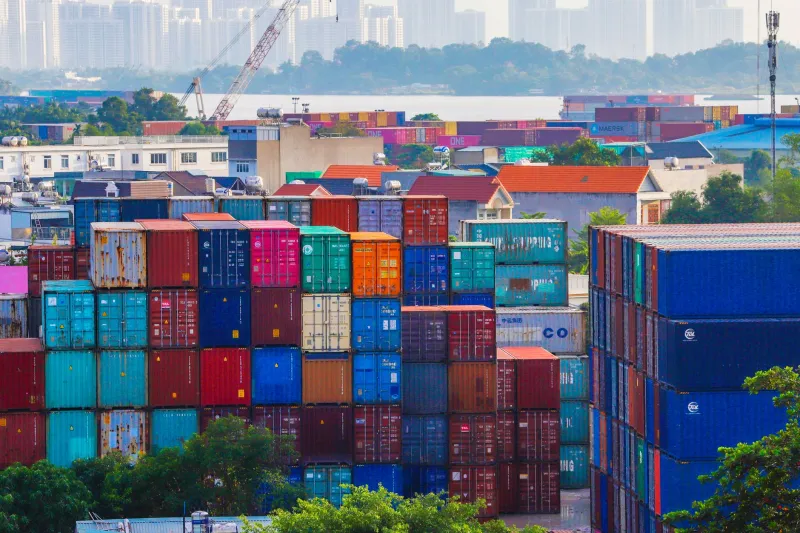
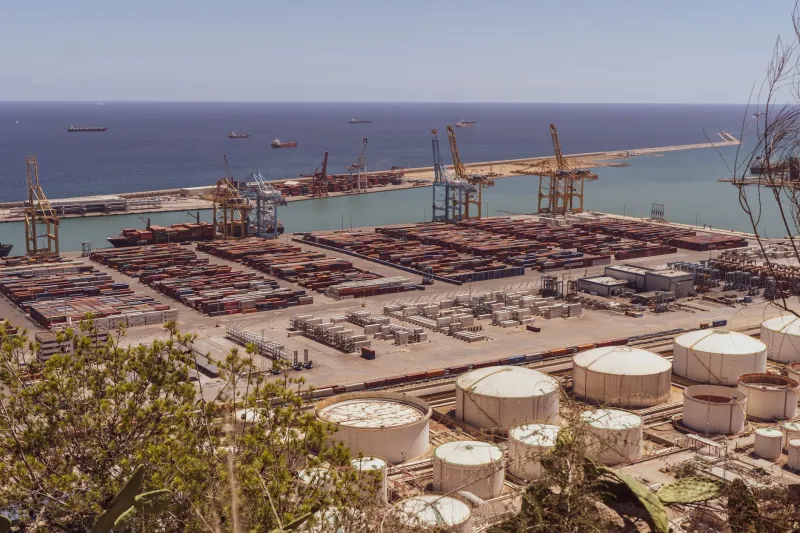
For most of the past half-century, the architecture of American maritime commerce has followed a predictable logic: goods arrive at a major gateway port—Los Angeles, Long Beach, New York/New Jersey, Savannah—and then fan outward through a network of trucking lanes, rail connections, and distribution hubs. That model made sense when volume concentration justified the infrastructure investment. It is making less sense now.
A growing number of regional and mid-sized carriers are engineering supply chains that deliberately avoid this conventional funnel. Rather than competing for berth space at overcrowded terminals, they are cultivating direct relationships with manufacturers and large-format retailers, routing freight through secondary ports or inland facilities, and in some cases bypassing deep-water port infrastructure almost entirely. The result is a parallel freight ecosystem that is younger, leaner, and—critically—faster for certain cargo categories.
The Congestion Premium Is Becoming Untenable
The strategic logic behind this movement begins with a straightforward calculation: congestion is expensive, and the cost is not evenly distributed. Large carriers with established terminal agreements and dedicated berth windows absorb congestion costs differently than mid-sized operators who must queue, wait, and absorb dwell charges on assets they cannot afford to have sitting idle.
For a carrier running twelve to twenty vessels, a forty-eight-hour delay at a major gateway port is not an inconvenience—it is a margin event. When those delays compound across multiple rotations per quarter, the cumulative drag on profitability becomes difficult to offset through rate adjustments alone. Regional carriers have responded not by lobbying for infrastructure reform but by removing themselves from the equation.
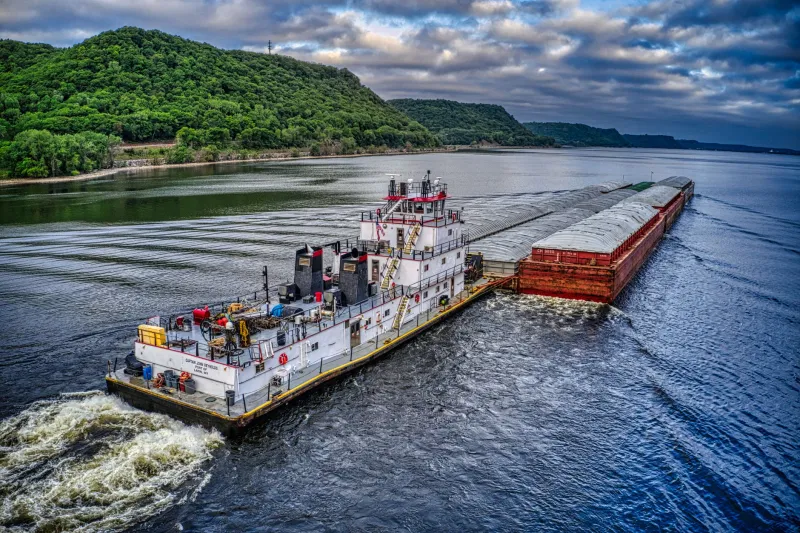
The practical mechanism varies by operator. Some have established direct calls at smaller Gulf Coast or Atlantic ports with significantly shorter vessel turnaround times. Others have partnered with short-sea shipping operators to move cargo from offshore anchorage to inland river terminals, entirely sidestepping the congested port corridor. A subset has invested in road-rail intermodal connections that originate at facilities closer to manufacturing clusters in the Southeast and Midwest, reducing dependence on coastal infrastructure.
Technology Is Making the Decentralized Model Viable
What makes this moment different from earlier attempts at port network diversification is the maturation of the technology stack supporting it. Visibility platforms, digital freight matching tools, and cloud-based customs compliance software have collectively lowered the operational complexity that once made alternative routing impractical for smaller operators.
A mid-sized carrier attempting to build a direct shipper relationship five years ago faced a significant administrative burden: customs documentation, inland drayage coordination, and carrier tracking all required either dedicated staff or expensive third-party intermediaries. Today, much of that workflow can be managed through integrated platforms that were originally built for trucking but have since expanded into maritime-adjacent logistics. The friction cost of going direct has declined substantially.
Electronic data interchange standards, once the exclusive domain of large forwarders with enterprise IT budgets, are now accessible through software-as-a-service models that regional carriers can deploy without significant capital outlay. That accessibility is a meaningful enabler. A carrier that can offer a mid-sized importer real-time visibility, automated documentation, and reliable estimated time of arrival performance does not need a marquee terminal address to win the business.
Which Shippers Are Most Susceptible to This Disruption
Not every import category is equally vulnerable to being pulled away from the major port network. The segments most exposed are those where speed-to-shelf matters more than unit economics at scale—specialty retail, seasonal goods, perishable commodities, and certain industrial components that feed just-in-time manufacturing lines.
A national retailer importing containerized consumer electronics in high volume will likely remain anchored to Los Angeles or Savannah, where the infrastructure for rapid customs clearance and outbound trucking is well-established. A regional grocery chain importing specialty food products from Central America, by contrast, may find that a direct call arrangement through a Gulf Coast facility is faster, cheaper, and more predictable than routing through a major gateway.
Manufacturers with production facilities in the interior of the country are another natural audience for this model. A furniture producer in North Carolina or a packaging manufacturer in Tennessee has little inherent reason to route inbound raw materials through a coastal gateway if a short-sea connection or a direct inland terminal arrangement can deliver comparable transit times at lower drayage cost. Regional carriers are actively marketing to this segment, and the pitch is resonating.
The Competitive Response From Established Operators
Large carriers and terminal operators have not been indifferent to this trend. Some have responded by accelerating investment in express terminal services, offering guaranteed berth windows and expedited customs processing as premium products designed to retain shippers who might otherwise be tempted by the regional alternative. Others have launched subsidiary brands or partnership programs targeting mid-market shippers with more flexible service structures.
These responses are rational, but they face a fundamental constraint: the infrastructure of a major gateway port is optimized for volume throughput, not agility. The operational culture, labor agreements, and physical layout of a facility like the Port of Los Angeles are built around processing thousands of containers per day, not delivering customized service windows to individual importers. Retrofitting that system for boutique responsiveness is genuinely difficult.
Regional carriers, operating with smaller vessel fleets and fewer fixed-cost obligations, can adapt more quickly. They can reroute a vessel on shorter notice, negotiate a direct berthing arrangement with a smaller terminal operator, and offer a shipper a dedicated account manager with actual decision-making authority. These are competitive advantages that do not require significant capital investment—they require organizational willingness to operate differently.
What This Means for the Broader Market
The emergence of direct, port-bypassing supply chains does not signal the obsolescence of major gateway infrastructure. The volume concentrations that justify investment in deep-water berths, automated stacking cranes, and rail on-dock facilities are not going away. But the market is stratifying in ways that have meaningful implications for how capacity is priced and allocated.
If mid-market cargo continues migrating toward regional alternatives, the residual volume at major gateways will skew increasingly toward high-volume, price-sensitive commodity freight—precisely the category where margin compression is most acute. That dynamic could accelerate further consolidation among large terminal operators while simultaneously creating a more durable business case for regional port investment.
For maritime professionals tracking where the next structural shift in US trade logistics is originating, the answer increasingly lies not at the center of the network but at its edges—where smaller operators, unburdened by legacy infrastructure and incentivized by the failures of the conventional model, are quietly redrawing the map.