Dead Weight on the Return Trip: How Carriers Are Finally Attacking the Empty Container Problem
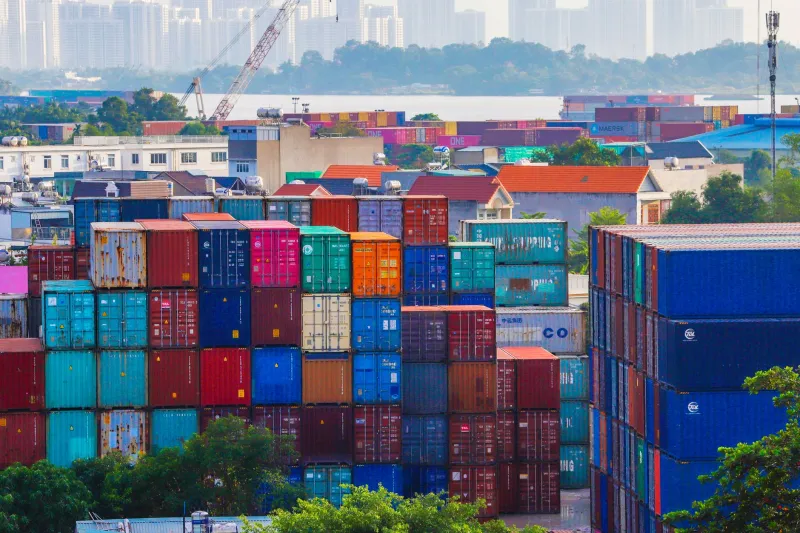
For every fully loaded container that arrives at the Port of Los Angeles or the Port of Savannah, there is a corresponding question that carriers have struggled to answer profitably for decades: what happens to that box on the way back? In many cases, the honest answer is that it travels empty — repositioned at considerable cost to wherever demand next materializes. That answer, multiplied across thousands of voyages and millions of twenty-foot equivalent units annually, produces a staggering structural loss embedded in the economics of global maritime trade.
Industry estimates have long placed the annual cost of empty container repositioning in the range of $15 billion to $20 billion globally. For US-centric carriers and operators engaged in transpacific trade lanes, where import volumes from Asia consistently dwarf outbound cargo flows, the imbalance is particularly acute. The United States imports far more containerized goods than it exports in equivalent volume, leaving carriers with a persistent surplus of boxes on the wrong side of the Pacific.
The Anatomy of an Imbalance
Understanding why empty repositioning persists requires looking beyond simple supply-and-demand logic. The problem is structural, shaped by trade asymmetries that have deepened over decades of US consumption-driven import growth. When a container arrives in Long Beach loaded with electronics or apparel, the carrier must decide what to do with it after discharge. If no viable export cargo is available — and often it is not, at least not at a price that justifies the slot — the box either sits idle in a depot or travels back across the ocean empty.
Neither outcome is cost-free. Depot storage generates per-diem fees and ties up equipment capital. Empty repositioning consumes fuel, port handling charges, and vessel slot value that could theoretically be allocated to revenue-generating cargo. The carrier absorbs both the direct costs and the opportunity cost of the underutilized asset.
Compounding the challenge is the geographic mismatch between where empty containers accumulate and where shippers need them. Agricultural exporters in the Midwest, for instance, frequently report difficulty sourcing available containers during peak harvest seasons, even as boxes pile up at coastal import hubs. The equipment exists; it is simply in the wrong place at the wrong time.
Why Traditional Solutions Have Fallen Short
Carriers have attempted to address empty repositioning through a variety of conventional means — repositioning tariffs, equipment interchange agreements, and chassis pool arrangements among them. These mechanisms have provided partial relief but have not resolved the underlying inefficiency. Repositioning tariffs shift some cost to shippers, but they do not reduce the number of empty miles traveled. Interchange agreements depend on carrier cooperation that competitive dynamics often undermine.
The core limitation of legacy approaches is informational. Decisions about where to move empty equipment have historically been made on the basis of static demand signals — known contract volumes, seasonal patterns, and port-level data that arrives too late to enable genuinely responsive repositioning. By the time a carrier identifies a demand concentration in, say, the Gulf Coast export market, the equipment has often already been committed elsewhere.
Data Analytics Enters the Picture
What has changed meaningfully in recent years is the quality and granularity of operational intelligence available to carriers willing to invest in it. Predictive demand modeling platforms, drawing on a combination of booking data, customs filings, port throughput statistics, and macroeconomic indicators, can now generate forward-looking equipment demand forecasts at the lane and port level with considerably greater accuracy than was possible even five years ago.
Several major carriers have begun deploying these tools with measurable results. One prominent transpacific operator reported reducing empty repositioning costs by approximately 12 percent over an 18-month pilot program by integrating predictive modeling into its equipment planning workflow. Rather than waiting for demand signals to emerge reactively, planners used forward forecasts to pre-position equipment closer to anticipated export demand concentrations — including inland depots near agricultural production regions — before the need became acute.
Port-to-port matching platforms represent another emerging category of solution. These systems function somewhat like a freight exchange for empty equipment, allowing carriers and leasing companies to identify opportunities to reposition boxes in conjunction with available backhaul cargo rather than as standalone empty moves. When a carrier can partially fill a return voyage with low-rate export cargo — agricultural commodities, recycled materials, or manufactured goods — that revenue, however modest, offsets a portion of repositioning cost and improves overall voyage economics.
The Role of Shipper Collaboration
Carriers pursuing backhaul optimization are increasingly finding that shipper engagement is a prerequisite for meaningful progress. Export shippers, particularly those with flexible loading windows or non-time-sensitive cargo, can serve as anchor customers for backhaul lanes that would otherwise travel empty. In exchange for priority equipment availability and negotiated rate structures, these shippers provide carriers with the load factor necessary to justify the voyage economics.
This kind of structured collaboration requires a degree of commercial transparency that has not always characterized carrier-shipper relationships. But as both sides face margin pressure in an environment of volatile freight rates and rising operational costs, the incentive to move beyond transactional pricing toward more integrated planning arrangements has grown considerably stronger.
US agricultural exporters — soybeans, corn, cotton, and forest products among them — represent a natural constituency for these arrangements. Their export volumes are substantial, their seasonal patterns are reasonably predictable, and their cargo, while low in value density, is well-suited to the container equipment that accumulates at major import gateways. Carriers that build dedicated backhaul programs around these commodity flows stand to recover meaningful margin on return voyages that would otherwise generate no revenue at all.
Structural Limits and the Long Game
It would be an overstatement to suggest that data analytics can fully eliminate the empty repositioning problem. Trade imbalances of the scale that characterize US import-export flows are not corrected by operational intelligence alone; they reflect deep macroeconomic realities that no carrier platform can unwind. What analytics can do is reduce the waste embedded in how carriers respond to those imbalances — cutting unnecessary empty miles, improving equipment utilization rates, and recovering incremental revenue on voyages that would otherwise contribute nothing to the top line.
For mid-sized US carriers operating in the shadow of the major alliance networks, the competitive implications are significant. The largest operators have the scale to absorb repositioning losses that would materially damage a smaller operator's margin profile. Investing in the analytical infrastructure to minimize those losses is not merely a technology decision; it is a strategic imperative.
The backhaul problem is old. The tools to address it with genuine precision are new. Carriers that close that gap first will carry a structural cost advantage into a freight market that is unlikely to become more forgiving.